What is Narrative Design?
Narrative Design is a framework for explaining why your business matters. It connects a change in the world to the decisions your customers need to make, then shows how your product helps them move forward. You can use it for a company story, a product launch, a campaign, or a presentation.
I developed this approach through my work in product marketing, especially at HubSpot. It draws on what I learned from Brian Halligan, the work of Andy Raskin, and the experience of building and launching narratives with marketing, product, and sales teams.
The framework has five parts:
- The change: what is happening in your audience’s world?
- The impact: what does that change mean for a specific audience?
- How to adapt: what approach will help them succeed?
- Why it’s hard: what makes that approach difficult?
- Your solution: what have you built to help?
The order matters. By the time you introduce the product, the audience should understand the situation, recognize the stakes, and see a reason to act.
How it works with positioning
When I first wrote about Narrative Design, I argued that it would replace product positioning. The more useful distinction is that they do different jobs.
Positioning explains who your product is for, what alternatives it competes with, and why its differences matter. Narrative explains why the audience should reconsider how they operate in the first place. Positioning makes the product understandable. Narrative gives that product a larger context.
You need both. Without positioning, a story can be interesting but leave people unsure what you sell. Without a narrative, a well-positioned product can still sound like another collection of features. A company with several products may have one shared narrative and distinct positioning for each product.
You don’t have to invent a category
A new category can emerge around an approach, but it isn’t the assignment. You can use this framework inside an established market. The useful question is whether you have a credible point of view that helps customers make a better decision. A new label, on its own, doesn’t do that.
What I learned building the Flywheel story
At HubSpot, I led product marketing for Service Hub. Ahead of its launch, I presented our positioning and launch story to the executive team. I had spent weeks on it and felt good about the pitch.
Brian Halligan got up, went to the whiteboard, and drew five slides. He asked me to take the story and work it into that structure: change, impact, how to adapt, why it’s hard, and our solution. He explained that it was the structure behind the original inbound marketing narrative.
I was frustrated at first. I had already done the work. But my GM, our head of sales, and I went back and rebuilt the story. We could reuse much of the positioning. What changed was the argument around it.
The story started with customers: their expectations were rising, and their experiences with a business could influence its growth. That led to a different way of thinking about marketing, sales, and service. The relationship couldn’t end at the sale. Helping customers succeed had to be part of how the business grew.
When we brought the story back, Halligan gave that approach a name: the Flywheel. The funnel described a journey toward purchase. The Flywheel put customers at the center of a continuing growth model. Service Hub had a clear role in helping companies deliver on that idea.
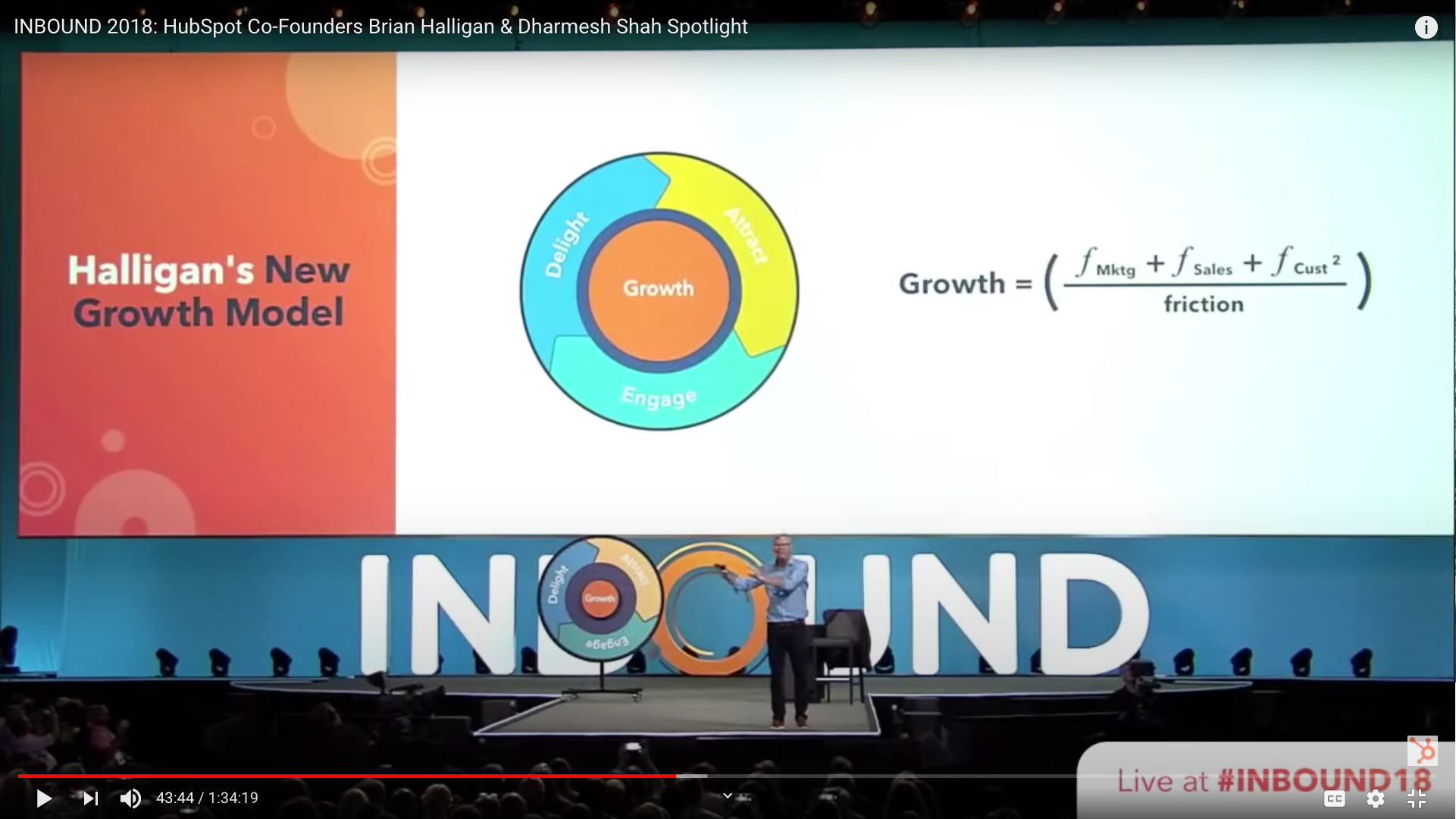
The important work continued after the presentation. Teams created education, explained the mechanics of the Flywheel, and connected it to the product. Customers could learn how to use the approach, with or without buying Service Hub.
That experience shaped how I think about narrative. The five slides gave us a structure. The research, positioning, leadership involvement, and work to teach the approach made it useful.
Before you start: choose the scope and gather evidence
Decide what you’re trying to change before assembling a room full of people. A company narrative requires different authority and coordination than a webinar. Write down the audience, the decision you want to influence, and where the story will first be used.
Build a small working team
Include people who understand the customer, the product, and how the company sells. Product marketing can lead the process without having to invent every answer. Product can challenge what’s possible. Sales and customer-facing teams can challenge whether the story matches what they hear.
For a company narrative, involve the CEO early. A finished deck presented for surprise approval is a poor substitute for shared ownership. For a product story, involve the product leader and the people responsible for taking it to market.
Bring inputs, not just opinions
- Customer language: interviews, sales conversations, support themes, and examples of how people describe their work.
- Positioning: the best-fit customer, competitive alternatives, differentiated capabilities, and the value those differences create.
- Evidence of change: observed behavior, credible research, product usage, and examples you can verify.
- Product reality: what works today, what requires services or training, and what is still a plan.
Keep facts, interpretations, and unanswered questions separate. If the group disagrees about what customers actually do, assign research. Don’t settle it by picking the most persuasive person in the meeting.
The Jellyfish Model describes how these inputs become positioning and a shared story, then flow into marketing. Narrative Design gives you a structure for that story.
1. Find the change
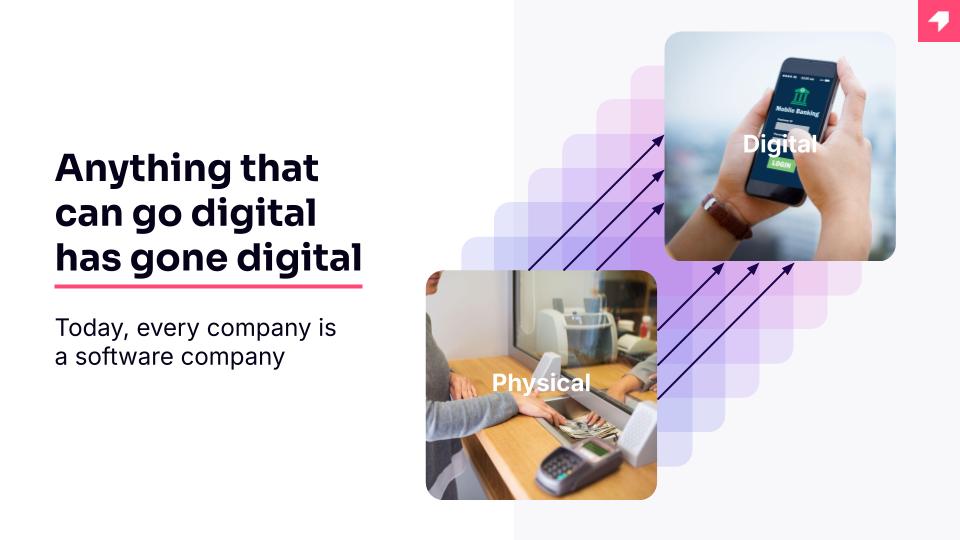
Start outside your company. What has changed about how people behave, what they expect, or what they can do? Look for something your audience can recognize in their own lives and that you can support with evidence.
A useful change has enough scope to explain why an old approach needs reconsidering, but enough specificity to mean something. “Technology is changing everything” is too broad. “Our platform now has AI” is a product announcement. Neither tells the audience much about their situation.
Look for behavior beneath the trend
The original inbound marketing story offers a clear example. People were gaining ways to avoid unwanted marketing: filtering email, screening calls, and skipping ads. The shift was about people’s ability and willingness to ignore interruptions. Blogging, search, and social media were part of the response.
That’s more useful than starting with a list of emerging channels. It gives the audience a reason to rethink their approach before you recommend a tool.
Questions to work through
- What are customers doing differently from a few years ago?
- What assumption behind their current approach is becoming less reliable?
- What have they already changed without waiting for your advice?
- Would this change still matter if your company didn’t exist?
Leave this step with: one clear statement of change and a few strong pieces of evidence. Record where the evidence came from and what it actually supports. If you need a long chain of speculation to establish the change, keep looking.
2. Explain the impact on a specific audience
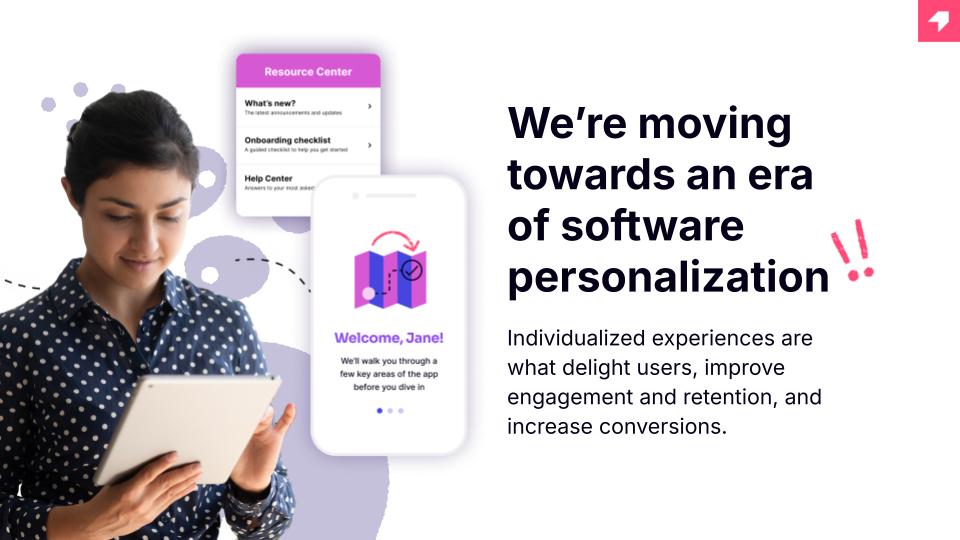
The same change can mean different things to different people. Choose whose story you’re telling. Then explain how the change affects their ability to do something they care about.
Stay with the consequences long enough to make them clear. This is where teams often rush: they state a trend, then immediately introduce a feature. The audience never gets a reason to care about the connection.
In the inbound example, the impact for marketers was that reaching people through interruption was becoming harder. More activity using the same methods didn’t necessarily translate into more attention. A team could work harder and still struggle to reach its audience.
The stakes should fit the evidence. You don’t need to predict that every company using the old approach will disappear. Explain what becomes more costly, less effective, or newly possible. Show the opportunity as clearly as the downside.
Make the consequence concrete
“Save time” is rarely the end of the story. What does that time let someone accomplish? Does it let a support team resolve an issue before a customer gives up? Does it let a marketer spend more time understanding a buyer? Connect the operational effect to the outcome.
- Who feels the change first, and in what part of their work?
- What happens if they keep doing what they do today?
- Who is already adapting, and what can you learn from them?
Leave this step with: a specific audience, a recognizable consequence, and a reason the decision matters now. A customer should be able to say, “Yes, that’s happening to us.”
3. Give people a way to adapt
Now offer a point of view about what the audience should do. I often call this the “new game,” a term associated with Andy Raskin’s work. It’s the approach you want people to adopt.
Inbound marketing gave marketers a clear direction: attract people with useful content instead of relying on interruption. The Flywheel asked companies to make customer experience part of their growth model. Both were ideas someone could understand before seeing a product demo.
Build the method before polishing the name
A useful approach changes decisions. Write down its operating principles: what people should start doing, what they should stop doing, and how they’ll know they’re making progress. If you can only describe it through your product’s features, you haven’t finished the method.
Give it a short, descriptive name when that helps people remember and share it. Resist the urge to make it sound proprietary at the expense of clarity. The best names often feel almost obvious once you understand the idea.
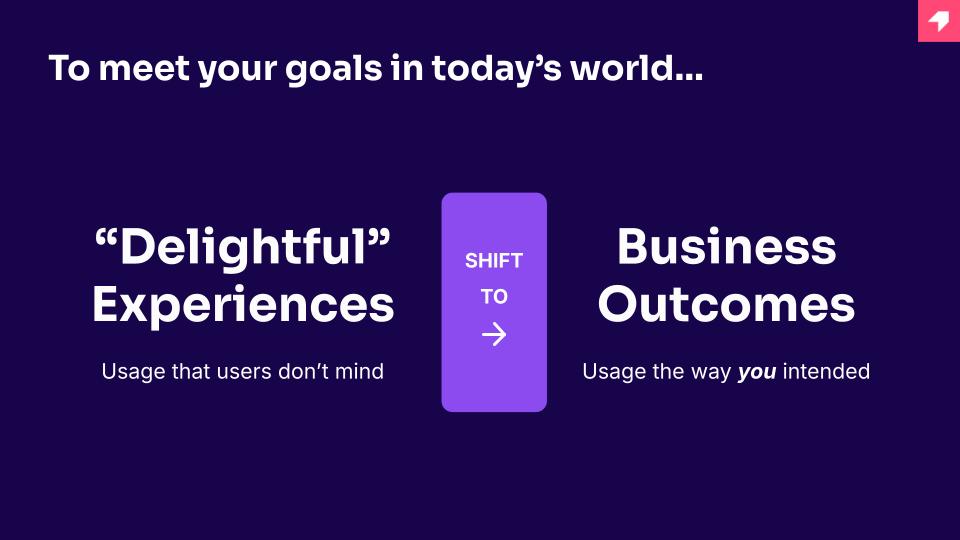
Then teach it. Start with a short explanation and a usable exercise, checklist, or worked example. Expand the material as customers reveal what they need help with. A large content library is only valuable if it helps people put the approach into practice.
Leave this step with: a plain-language recommendation and a short playbook. Someone should be able to take a useful first step before they buy anything.
4. Acknowledge why it’s hard
If the approach were effortless, your audience would probably already be doing it. Explain the practical obstacles. This is where you show that you understand their work beyond the pitch.
For early inbound marketers, the idea was appealing. Executing it meant learning new practices, coordinating blogging, search, social, and email, assembling tools, getting leadership support, and training a team. Agreement with the idea didn’t remove those difficulties.
Listen for the same distinction in your market. Someone may believe your point of view and still lack the time, skills, authority, or systems to act on it. “They don’t get it” is usually a less useful explanation than understanding what makes the change difficult.
Separate the obstacles
- Understanding: people don’t know how to use the approach.
- Execution: the work is fragmented, manual, or difficult to repeat.
- Organization: ownership, incentives, or approval processes get in the way.
- Confidence: people need evidence that the effort will be worthwhile.
Your product may address some of these. Education, services, implementation support, or changes inside the customer’s company may address others. Be honest about that division.
Leave this step with: the most important barriers, expressed in language customers would use. Avoid manufacturing obstacles merely because you have a feature that solves them.
5. Show what you’ve built to help
Introduce your product and explain exactly how it helps people carry out the approach. The reader should be able to trace each important capability back to an obstacle you just described.
In the inbound story, bringing the work into a connected set of tools made sense because the audience already understood the difficulty of coordinating it. Training and education mattered for the same reason. The offer followed from the story.
Make the connection visible
For each capability you include, complete this sentence: “Because doing this is difficult, we built this, so the customer can do that.” Replace vague outcomes with something the buyer can observe. Support it with a demonstration, a customer example, or evidence from the product.
Cut features that don’t advance the argument. They may belong in a later conversation, a comparison page, or technical documentation. This story needs enough detail to make your role credible without becoming a tour of everything you sell.
Keep the boundary between available capabilities and future plans clear. If the approach requires something your product can’t yet deliver, that is useful feedback for the business. Better language won’t close a product gap.
Leave this step with: a specific explanation of the product’s role, proof that it can fulfill that role, and a sensible next action for the audience.
Run a working session, then write the story
You can get a first draft from one focused session. Expect that draft to expose research gaps and disagreements. The meeting’s purpose is to produce an argument you can examine.
Here’s a practical 90-minute format once the team has reviewed the inputs:
- 10 minutes: agree on the audience, scope, and decision the story should influence.
- 20 minutes: propose possible changes and compare the evidence. Pick one to explore.
- 15 minutes: work through the impact on the audience. Keep solutions out of this discussion.
- 20 minutes: define the approach and the obstacles to adopting it.
- 15 minutes: connect the product to those obstacles and identify the proof you have.
- 10 minutes: read the argument from beginning to end. Assign the unresolved questions.
Have participants write down their initial ideas before discussion. It gives you more to work with than the first confident answer in the room. Keep a separate list of assumptions that need validation, with an owner for each.
Make two versions
First, write a short memo with one section for each step. Writing forces you to connect the ideas. Then make five slides, one per step. The constraint helps you see whether the central argument is simple enough to repeat.
The five slides are the core story. A sales conversation may need discovery, a demo, proof, pricing, and next steps around it. A keynote may need more context and examples. Keep a common argument while adapting the delivery.
Use this first-draft outline
- We’re seeing this change, and here is the evidence.
- For this audience, that means this consequence.
- To respond, we believe they should take this approach.
- Doing that is difficult for these reasons.
- We help with these specific obstacles, and here is the proof.
Test the argument before polishing the language
Share the rough story with people who understand the market and with customers who weren’t in the workshop. Ask them to explain it back in their own words. A polite “I like it” won’t tell you where the logic breaks.
- Which part matches what you’re experiencing? Which part doesn’t?
- What would you question or ask us to prove?
- What would this approach change about how you work?
- How does the product help? Where is the connection unclear?
Listen for the point where their explanation stops resembling yours. That’s a useful place to investigate. Repeated confusion is a reason to revise the argument before adding more polish.
Common failures and what to fix
- The story starts inside the company. You’ve described your ambitions or roadmap. Return to what customers are experiencing.
- The change is asserted, then abandoned. Add the context and proof the audience needs to accept it.
- The impact is missing. A trend jumps straight to a product. Explain the consequence for the chosen audience.
- The new game is mostly a name. Show the decisions and actions it changes. Simplify terms that need constant explanation.
- The product appears disconnected. Revisit the obstacles. Either the product connection is weak or the story is aimed at the wrong issue.
A direct problem-and-solution explanation still has a place in marketing. Use this framework when people need context for a bigger change. Don’t force all five steps into every ad or answer to a simple product question.
Make it worth listening to
“I’ve struggled many times with making it actually feel like a story. I guess making it more entertaining vs just dumping facts and data on people.”
Jason Oakley · A comment shared in my Boston PMA talk
Once the argument holds together, work on how it feels to hear or read it. Adding drama too early can hide a weak idea. Adding concrete detail to a sound idea makes it easier to understand and remember.
Give the stakes a human scale
Show what the change means during an ordinary day. A missed handoff, a customer repeating their problem, or a marketer producing work nobody uses is more recognizable than an abstract claim about transformation. Use real examples, or make clear when an example is illustrative.
Use credibility, emotion, and logic
Ethos asks why the audience should trust you. Pathos asks why they should care. Logos asks whether the argument stands up. Your experience and evidence build credibility; the customer’s situation creates emotional relevance; clear connections between the five steps provide the logic.
Keep the emotional weight proportional to the decision. The customer’s real frustration is enough. You don’t need to turn every software purchase into a crisis.
Read it aloud and listen for the jumps
Each section should make the next one easier to understand. If you need to stop and explain how two ideas connect, revise the transition or the idea itself. Remove repeated setup, unexplained terminology, and details that don’t help the audience follow the argument.
Put the story to work across the company
A narrative needs a plan for use. Decide where it will appear, who will adapt it, and how you’ll collect feedback. A launch presentation alone won’t change how the company communicates.
Get buy-in at the right level
If leadership is sponsoring a company-wide change, agree on owners, milestones, and the work required from each team. Involve the leader who will deliver the story in developing it.
At a larger company, start where you have support: a new product, a campaign, an underperforming product area, or a specific customer use case. Show what the approach produces. Bring the draft, the launch plan, and customer feedback to potential champions. Concrete work is easier to evaluate than a pitch for “better storytelling.”
Launch internally first
Have the appropriate leader present the story. Publish the written version and core slides somewhere everyone can find them. Then work with partner teams on what it means for their work:
- Marketing: messaging guidance, website copy, campaign ideas, and educational content.
- Sales: a first-meeting story, discovery questions, demonstrations, and answers to likely objections.
- Product: a discussion of how the roadmap supports the approach and where it doesn’t.
- Customer teams: guidance for helping existing customers adopt the approach and understand what changes for them.
Expect objections when the story challenges an established model. Moving from funnel to Flywheel raised questions for teams whose work was built around the funnel. Those questions helped us develop the explanation and the playbook.
Give the audience somewhere to learn
Publish a clear explanation of the approach that teams can point to. Build practical education around it: a worked example, an implementation guide, a customer story, or a workshop. Choose the formats that help your audience take action.
If you’re tying the story to a product launch, connect the announcement, demo, sales materials, and follow-up content to the same argument. Each piece can emphasize a different part. They should still agree about the change, the approach, and the product’s role.
Look for evidence of usefulness
Watch whether customers can repeat the idea, salespeople use it without prompting, and teams make more consistent decisions. In a focused campaign, compare relevant results and feedback with the previous approach. Don’t credit the narrative alone for a revenue change that also involved new products, pricing, or distribution.
Update the story when the underlying reality changes
Don’t rebuild the narrative every time the team gets tired of saying it. Customers usually encounter it less often than you do. Repetition helps an approach become familiar.
Refresh examples, evidence, and product connections as the business develops. Reconsider the core argument when the original change no longer explains the market, the audience’s priorities shift, or the recommended approach stops being useful.
The Flywheel built on inbound rather than discarding the whole idea. It updated a central model to give customers a more complete way to think about growth. Look for that kind of extension before starting over.
When reviewing the story, ask which of the five steps has become less true. Fix the specific gap. A weak proof point needs better evidence; a changed customer need may require a different approach.
Where AI can help with the work
AI can be useful for exploring alternative explanations, organizing supplied research, challenging a draft, and spotting repetition. Give it the customer context and evidence you actually have. A fluent story built on an invented customer insight will waste your time.
Try asking it to identify the weakest connection between your five steps, list the assumptions a skeptical buyer would challenge, or point out where your recommendation is just a product feature in disguise. Ask for several possible interpretations of the same research before choosing one.
Check any suggested sources and claims yourself. Don’t treat generated customer language as an interview, or an agreeable model response as market validation. Keep responsibility for the point of view with the people who understand the customer and have to deliver on the promise.
Keep working on your own narrative
Start with one audience and one situation where the current story isn’t working. Gather the evidence, draft the five steps, and put the argument in front of someone outside the working team. Use what you learn to improve the next version.
For the broader product marketing process behind the story, read the Jellyfish Model guide. If you want to work through Narrative Design with your team, here’s how I can help.
I’m interested in hearing how you use the framework, including where it breaks down. Those experiences are what make it more useful.
More on narrative, positioning, and product marketing on my Substack.